House centipedes have long, flat bodies, thin, spindly legs, and a couple of antennae; it’s understandable why some people may find these creatures creepy. What’s worse, house centipedes move really fast. But are house centipedes as bad as they’re made out to be, and are they dangerous?
In short, house centipedes are not dangerous. They don’t pose any dangers to humans and animals. Unlike other insects, house centipedes tend to flee from creatures larger than them instead of attacking. While they rarely sting, when they do, their venom is too weak to cause any concern, anyway.
But while house centipedes are usually nothing to worry about, they can be annoying to have around — especially if you’re not a fan of bugs. Let’s explore how house centipedes can affect people and animals, why having a few at home can be beneficial, and why you have house centipedes at home.
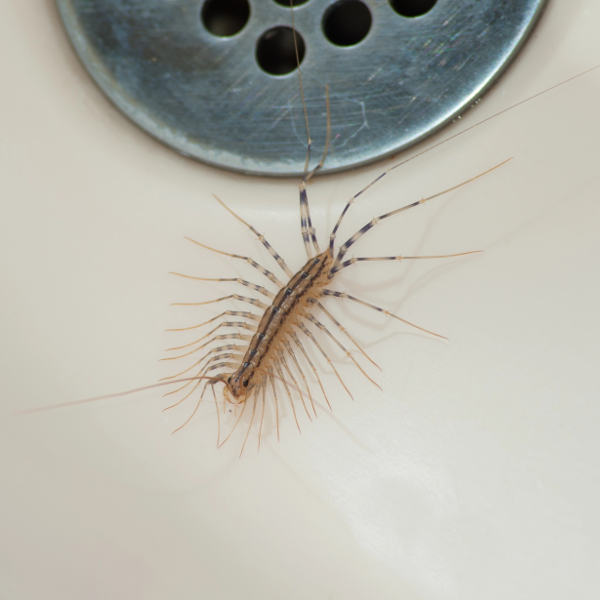
Are House Centipedes Dangerous to Humans?
House centipedes are not dangerous to humans. At the sight of a human being, their first reaction is always to flee instead of stinging. But on the rare occasion that they do sting a person, it usually doesn’t pose any serious risk since their venom is too weak to cause any harm.
However, like other centipedes, house centipedes carry toxic venom that, when injected into a human or an animal, may cause inflammation around the sting. The sting can be painful. Some people may also have allergic reactions to house centipede stings.
So despite these spindly being nowhere near as dangerous as wasps or scorpions, it’s important to know how to provide first-aid care when a sting does happen.
House Centipede Bites Can Be Painful
If a house centipede bites you, you may consider yourself among the really unlucky ones because these insects are known to be shy and prefer to flee than fight. Still, no matter how shy, they will attack when provoked, such as when you try to hit them with a slipper or step on them.
Symptoms of House Centipedes Bite
A house centipede bite can be painful and cause swelling for up to 48 hours, especially when a big one gets you. Here are other symptoms of house centipede bite to watch out for:
- Redness around the area of the bite
- Inflammation or swelling
- Itching
- Numbness (on rare occasions)
What to Do When You Get Stung
In most cases, pain from house centipede bites is quite mild and may be tolerable to most adults. However, kids may find a house centipede bite quite unpleasant. The good news is the sting usually doesn’t last.
But if you want to hasten the healing process or are particularly bothered by the pain, here’s what you can do:
- Ice the area of the sting. Doing this will alleviate the inflammation and pain.
- Refrain from scratching the affected area. Sometimes, a sting can itch. Don’t scratch the inflamed area at all, as doing this can only aggravate it and cause more serious problems like a rash or infection.
- Watch out for serious symptoms. In some cases, the sting can be a bigger problem than just the usual redness and swelling. Watch out for symptoms like headache, difficulty breathing, or hives. Call a doctor when these occur.
What to Do When a Sting Causes an Allergic Reaction
While it’s quite rare, some people can have an allergic reaction to house centipede stings. In such cases, waiting until the swelling goes away is not enough. Severe reactions can be fatal.
Here are signs that you have an allergic reaction to house centipede sting:
- Hives
- Swelling around the throat
- Intense headache
- Difficulty breathing or wheezing
- Dizziness (which may or may not be accompanied by nausea)
- Feeling lightheaded
- Fainting
Suppose you or anyone you know experiences any of these symptoms. Call a doctor right away. Reactions can range from mild to intense, but even the milder reactions can rapidly become worse.
Hives are usually the first sign that a reaction is happening. By all means, don’t wait for more serious symptoms like difficulty breathing before getting medical help.
Are House Centipedes Dangerous to Pets?
House centipedes are not dangerous to pets like cats, dogs, and other animals. Cats and dogs can be extremely curious, which is why it’s common for them to sometimes eat house centipedes or bite them during play. Thankfully, house centipedes don’t pose any threats, even when ingested by animals.
If you see your pet playing with a house centipede or chasing it, don’t worry about it too much. Your pet may get stung as it tries to catch the centipede, but it usually does nothing more than slight swelling, which can appear as a small furry mound on its body.
What to Do When a House Centipede Bites Your Pet
Not all animals react the same way to a house centipede bite, so it’s important to observe the area of the sting (which will look like a slight bulge) to check whether it’s getting better or worsening. The swelling should go away in a few hours.
Also, try to observe how your pet is reacting to the sting. If your pet is wincing, whining, or yelping, it could be a sign that it’s under some discomfort. When this happens, place an ice compress on the affected area, and observe how your pet is doing.
If your pet continues to feel pain, take your pet to the vet right away.
Reasons House Centipedes Are Good to Have in the House
Creepy though they look, you probably should be grateful that house centipedes are hanging around in your house. Instead of killing them, maybe you should let them be. Surprising as it sounds, house centipedes could be just what you need for your home to be a better place to live.
Here are some reasons:
House Centipedes Kill Unwanted Bugs
The biggest reason you shouldn’t kill house centipedes lurking around in the dark corners of your house is that they do the nasty but necessary job of killing those pesky bugs for you. All those unwanted creatures that have been bugging homes forever — cockroaches, termites, and flies.
House centipedes use a technique called “lassoing” to catch an unsuspecting little critter and inject its toxic venom into its victim. While a house centipede’s venom does virtually nothing to humans and animals, it’s pretty effective in killing bugs. That’s great because nobody likes a roach to roam freely in their home.
These Creatures Are Harmless
House centipedes are practically harmless, and they eliminate those pesky pests in your home. That means you get all the benefits of having them around but none of the disadvantages — at least not anything like the ones that roaches and flies experience.
Sure, you may get stung when you’re too aggressive with one or try to catch it as it scurries to escape, but that almost never happens. These tiny creatures (to our advantage) are scared of bigger animals and humans. They’ll always try to avoid getting flattened with a slipper as much as possible.
Reasons You Have House Centipedes at Home
Why is it that house centipedes seem to favor some houses over others? If you have a few at home, you may wonder what makes your home such a nice shelter for these critters. Here’s why.
Your House Is Damp and Humid
House centipedes love dark and humid environments. These creatures live underneath rocks and other very small crevices in the wild, making them hard to detect. So if they’re hiding underneath furniture or appliances inside your home, it could be because these places mimic their natural shelter in the wild.
To make your home less damp and humid, you should air it out regularly. Open your windows and doors to allow air to circulate, particularly in the morning when you can get the most sunlight. Your house could use some sunshine.
You can also use a dehumidifier or turn up the heating on cold days.
There Are Pests in Your House
Another reason house centipedes want to share spaces with you is that your house has plenty of food. These creatures feed on bugs like roaches and termites. So if you’ve been seeing house centipedes for a while now, you should check your home for roach or termite infestation that’s attracting the house centipedes.
Sure, house centipedes can and will kill insects like cockroaches. However, if you have a serious infestation, you can’t leave it up to the house centipedes to eliminate the problem altogether.
Also, you wouldn’t want to wait too long before the roaches completely disappear. While house centipedes will work hard to catch these bugs, doing so takes time.
Read also: Warning Signs of a House Centipede Infestation
Conclusion
House centipedes look like nasty creatures, but thankfully for us and our pets, they’re not harmful creatures. However, their presence in the home signifies a more serious concern (such as a pest infestation) that needs to be addressed quickly.
You can prevent house centipedes from lingering around your home by ensuring that you get rid of any pest infestation. House centipedes feed on bugs like roaches and termites. Also, make sure your home isn’t damp or humid. You can use a dehumidifier to control the moisture in your home.